
Mold problem? Call to get connected
Independent local mold contractors
Mold growing on walls, ceilings, or crawl space framing needs to be removed properly, or it tends to come right back. Mold removal involves containing the area, taking out damaged materials, cleaning surfaces, and fixing the moisture behind the growth.
Seattle’s damp climate means mold can take hold in basements, bathrooms, attics, and crawl spaces faster than many homeowners expect. Removing it properly takes more than bleach and a scrub brush, especially when growth has spread into drywall, insulation, or wood. The contractor you are connected with can look at the problem, explain what needs to be removed, and talk you through how the work area will be protected so the rest of your home stays clean.
Mold problems do not all call for the same fix. Some homes need an inspection to find hidden growth, others need testing to confirm what is present, and many need full removal of mold that has already spread. One call reaches independent local contractors who handle each of these services. Compare the options, or call to talk through your situation and find out which service makes the most sense for your home.
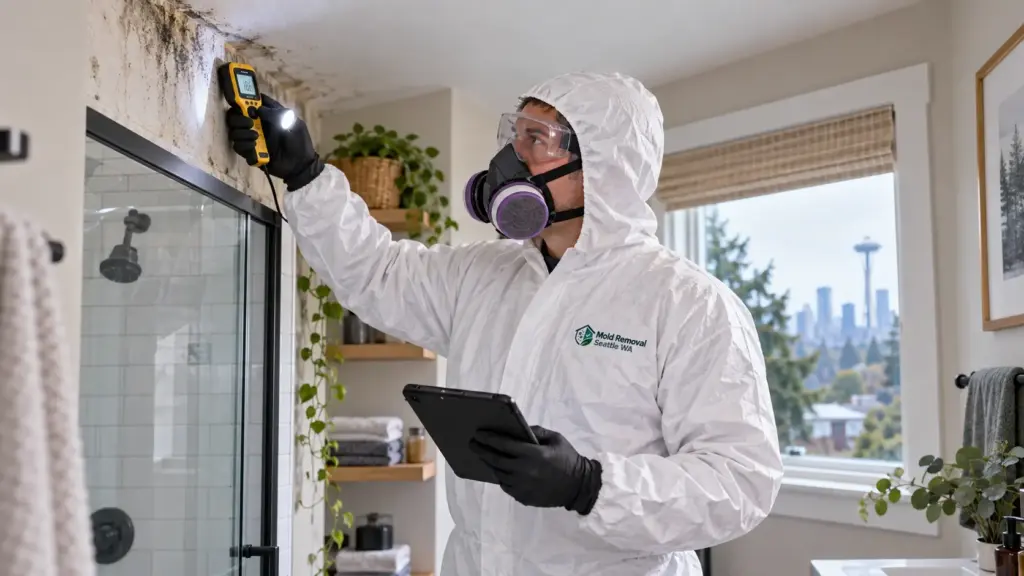
An inspection is a detailed look at the areas where mold usually hides, such as crawl spaces, attics, basements, and bathrooms. The inspector checks for visible growth, water damage, and hidden moisture, then explains what they found. It is a smart first step when you smell mold, have had a leak, or are buying an older Seattle home and want to know what you are getting into before you commit.
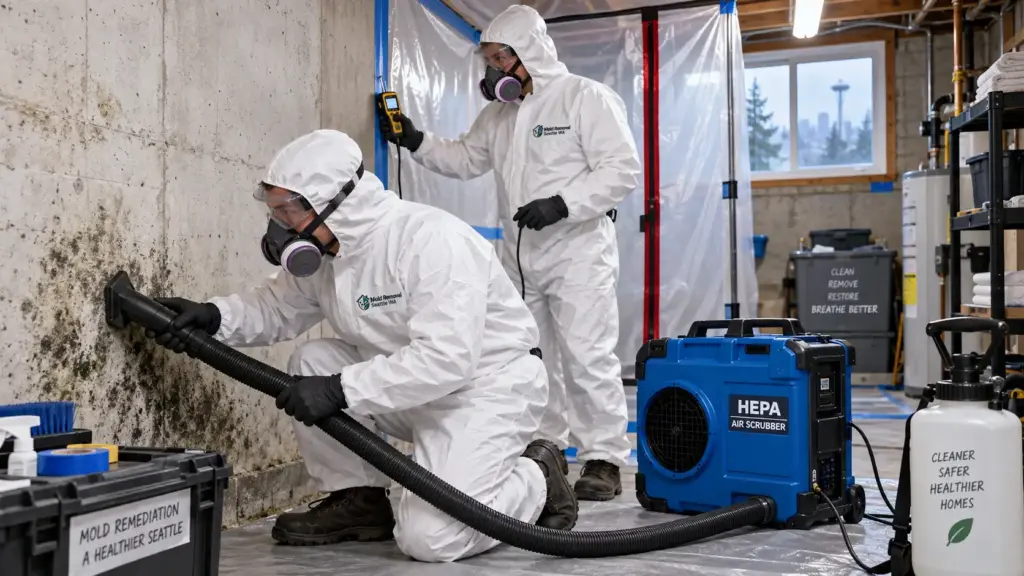
Remediation is the full process of containing, removing, and cleaning up mold that has spread. Damaged materials like drywall and insulation are cut out, surfaces are cleaned, and the area is dried. The moisture that caused the problem is addressed so growth does not return. It is the right choice when mold covers a larger area or keeps coming back after you have cleaned it yourself more than once.
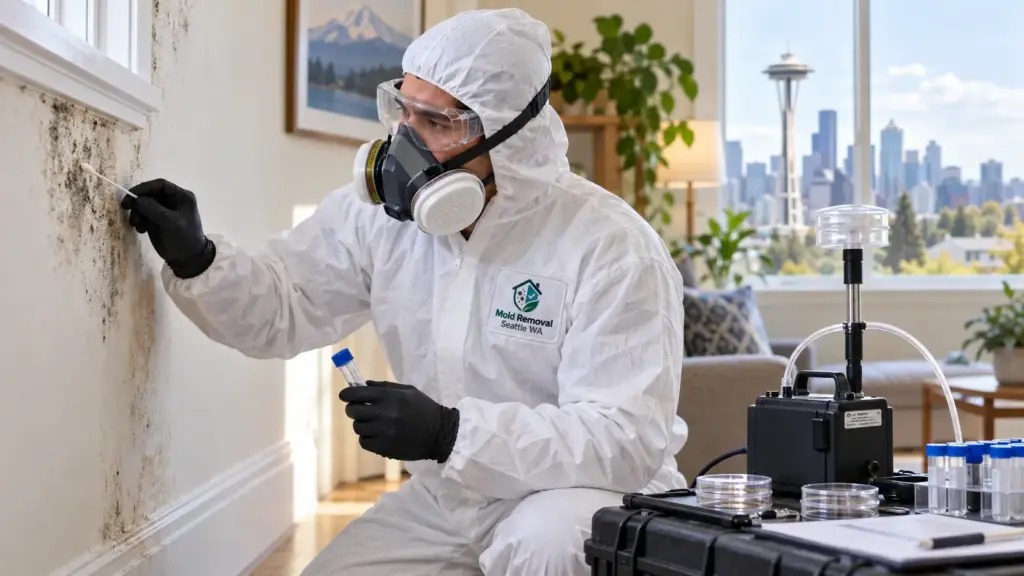
Testing uses air and surface samples, analyzed by a lab, to show what mold is present and whether indoor spore levels are elevated compared with the outdoors. It helps when you smell mold but cannot find it, want documentation for a home sale, or need to confirm that a cleanup worked. The results give you evidence to guide your next step instead of guesswork about what is happening inside your walls.
Finding someone to remove mold usually means calling around, leaving messages, and trying to compare companies you know nothing about. That first step can be much easier. One call connects you with an independent local contractor who handles mold removal in Seattle.
When mold is spreading, you want to speak with someone who can help, not spend a day making calls. Instead, you dial one number and get connected with an independent contractor working in the Seattle area. Describe what you are seeing, where it is, and how long it has been there. You can ask whether it sounds like a removal job and what the process would look like before deciding anything.
The contractors you reach are independent businesses serving Seattle homes, so they are familiar with the region’s moisture problems, from wet crawl spaces to condensation around windows. Each contractor sets their own pricing, schedule, and terms. Before hiring anyone, ask for proof of license and insurance, request a written scope of work, and make sure you understand exactly what the removal includes, including any repairs to walls or floors afterward.
A call is not a commitment. Mold removal can mean cutting out drywall or replacing flooring, so it is reasonable to ask plenty of questions and take time before agreeing to anything. Ask how the area will be contained, whether you can stay in the home, and how long the work usually takes. Compare options if you like, and move forward only when you are comfortable with the contractor and the plan.
Removing mold properly protects your home, your health, and your time. Professional removal does more than clear visible growth: it contains the work area, removes materials that cannot be saved, and deals with the moisture that caused the problem. That is the difference between a lasting fix and cleaning the same spot every winter. Seattle homeowners choose professional help over handling mold on their own for a few main reasons.
Active mold releases spores and musty odors into the air, and in closed-up Seattle homes during the wet season, those can build up indoors. Professional removal takes out the source instead of masking it, and containment keeps spores from spreading into clean rooms during the work. Filtration equipment is often used as well. Once the growth is gone and the area is dry, most homes smell fresher and feel more comfortable to live in.
Mold can trigger sneezing, congestion, itchy eyes, and skin irritation in people who are sensitive to it, and those with asthma or allergies may react more strongly. Removing the mold and correcting the moisture reduces exposure in your home. Mold removal is not medical treatment, so persistent symptoms deserve a conversation with a doctor. Taking out a known source of irritation, though, is a practical step toward a more comfortable home for everyone who lives there.
Mold feeds on wood, drywall, and insulation, and over time it can stain, weaken, and rot building materials. Hidden growth in crawl spaces and wall cavities can go unnoticed for years in Seattle homes. Removing mold early keeps the damage from spreading and helps you avoid larger repairs later. It also matters when you sell, since buyers and their inspectors look closely for signs of mold and past water damage in local properties.
Mold returns when the conditions that caused it stay the same. A professional removal plan includes drying the area thoroughly and addressing the source, whether that is a plumbing leak, poor ventilation, or groundwater in a crawl space. Simple changes can make a big difference, such as running bathroom fans, using a dehumidifier in damp months, and keeping gutters clear. Ask the contractor which prevention steps they recommend for your home.
If you are dealing with mold, you probably have questions about what removal involves, how long it takes, and whether you can do it yourself. Most of those questions share a few basic answers for Seattle homeowners.
The terms are often used interchangeably. Strictly speaking, mold removal refers to taking out and cleaning away the growth itself, while remediation describes the full process: containing the area, removing mold and damaged materials, cleaning, drying, and addressing the moisture that caused it. Since mold spores exist naturally everywhere, the realistic goal is to remove growth and return the home to normal conditions. Ask the contractor what their process includes so you know what to expect.
Professional help makes sense when mold covers more than a small patch, keeps coming back after cleaning, or is growing on porous materials like drywall, carpet, or insulation. Mold inside walls, in HVAC systems, or across a crawl space also usually needs professional work. The EPA suggests that areas larger than about ten square feet are generally best handled by professionals. If you are unsure, describe the situation on a call and ask for an opinion.
Small areas on hard, non-porous surfaces, such as a bit of growth on tile or a window sill, can often be cleaned with detergent and water while wearing gloves, eye protection, and a mask. Larger areas and porous materials are harder to handle safely, and scrubbing without containment can spread spores to other rooms. If the moisture source is not fixed, the mold will likely return. For bigger or recurring problems, professional removal is the safer option.
The timeline depends on the size of the affected area, the materials involved, how long drying takes, and whether repairs are needed afterward. A small, contained job might take a day or two, while larger projects, such as a full crawl space or several rooms, can take longer. Limited access in attics and crawl spaces can add time too. The contractor you speak with can give you a realistic timeline after looking at the problem.
It can, if the moisture that caused it is not corrected. Mold needs water to grow, so fixing leaks, improving ventilation, managing humidity, and directing rainwater away from the home are what keep it from returning. In Seattle’s climate, ongoing moisture control matters every year. Ask the contractor what prevention steps they recommend, and consider a follow-up check after the work is done, especially if the original problem was large or long-standing.