Mold problem? Call to get connected
Independent local mold contractors
Not sure whether that musty smell or those dark spots are mold? Mold testing can help answer the question with actual data. Air and surface samples show what is present and how indoor spore levels compare with the outdoor air.
Mold testing measures what you cannot see with your eyes. Air samples show whether spore levels indoors are higher than outside, which can point to hidden growth. Surface samples identify what is growing on a specific spot. Together, the results help you decide whether a closer inspection or professional remediation is needed. Testing is especially useful when you smell mold but cannot find it, after water damage has been cleaned up, or before buying a home.
Mold testing is a fairly simple process from the homeowner’s side, but each step affects how useful the results will be. Samples need to be collected in the right places, handled correctly, and analyzed by a laboratory. The contractor you are connected with can explain the methods they use and why. Mold testing in a Seattle home typically follows three stages, from the first walk-through until you receive your results.
Testing usually starts with a short walk-through of the home to understand your concerns and decide where samples should be taken. The contractor looks for visible growth, water stains, and signs of past leaks, and asks about smells, symptoms, and recent water damage. In Seattle homes, basements, crawl spaces, bathrooms, and rooms along exterior walls are common areas of interest. This step helps focus the testing on the places most likely to give meaningful results.
Air samples are collected with a pump that draws a measured amount of air through a collection device. An outdoor sample is usually taken as well, so indoor levels can be compared with the normal background levels outside. Surface samples are taken with swabs or clear tape from suspected spots. Collecting samples usually takes less time than people expect. Keeping windows and doors closed beforehand, if the contractor asks you to, helps make air samples more accurate.
Samples are sent to a laboratory, where technicians identify the types of mold present and measure spore concentrations. The results typically come back as a report showing indoor and outdoor comparisons and the mold types found. Reading a lab report can be confusing, so ask the contractor to explain what the numbers mean for your home. If the results point to a problem, they can also help you understand the inspection or remediation options that follow.
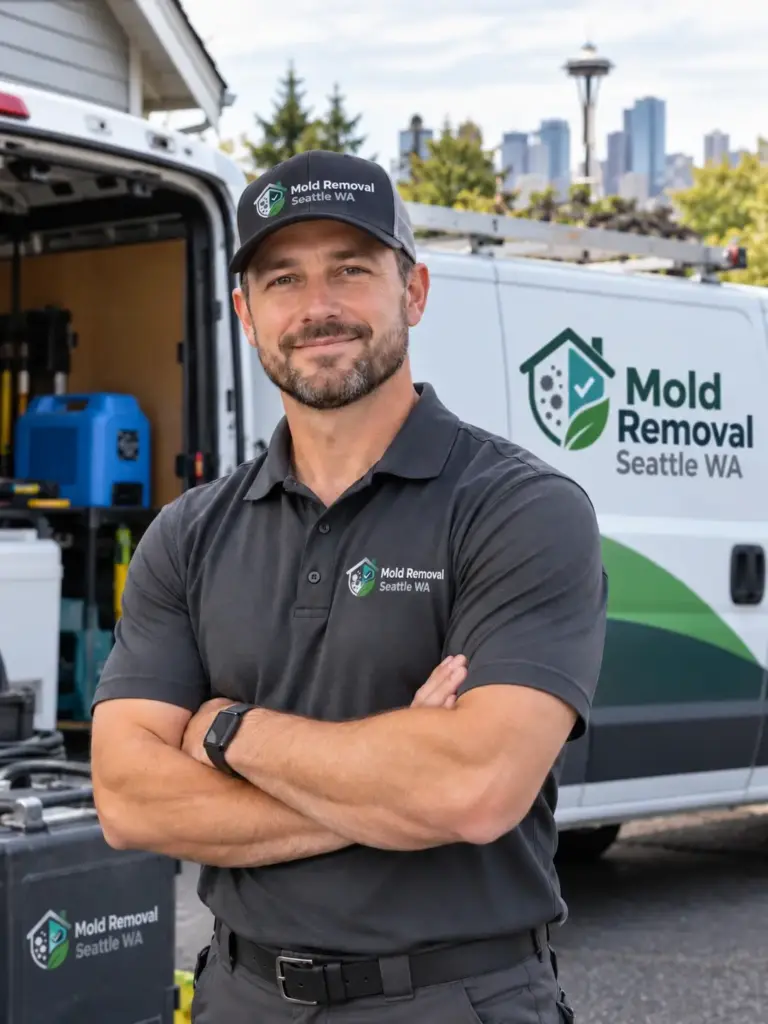
Figuring out who to call about mold testing can take more time than the test itself. There is a simpler route. You make a single call and get connected with an independent local contractor who offers mold testing in Seattle. We connect you with independent mold removal specialists in Seattle who handle inspection and remediation.
Rather than contacting several companies to compare testing services, you call one number and speak with an independent contractor working in the Seattle area. That is helpful when you have a smell you cannot trace, a leak you just repaired, or a home purchase with a deadline. On the call, you can describe the situation, ask which kind of testing fits, and find out how the process works before you agree to anything at all.
The contractors in this network are independent businesses that serve Seattle homes. They are familiar with the conditions that make mold common in this region, including damp winters, older homes with limited ventilation, and basements that take on water. Each contractor sets their own pricing and methods. Before you book, ask for their license and insurance details, find out which lab they use for analysis, and ask how and when they will share the results with you.
A lab report full of spore counts and scientific names is not much use if nobody explains it. When you speak with a contractor, ask how they will walk you through the results and what the next steps would be in different scenarios. Knowing that ahead of time helps you set realistic expectations. There is no obligation to book testing on the first call, so take your time, ask questions, and choose what fits your situation.
People considering mold testing often want to know whether it is worth doing, what it measures, and what to do with the results. Those questions have fairly consistent answers for Seattle homeowners. Testing needs vary from one home to the next, so use this as a guide rather than a final answer.
Often, no. If mold is clearly visible, the EPA notes that sampling is usually not necessary to decide that it should be cleaned up and the moisture fixed. Testing becomes more useful when you smell mold but cannot find it, when you want to check whether hidden growth is affecting the air, or when you need documentation after remediation. A local contractor can help you decide whether testing adds useful information in your particular case.
The two most common are air sampling and surface sampling. Air sampling measures the concentration of spores in the air and compares indoor levels with outdoor levels. Surface sampling uses swabs or tape to collect material from a specific spot, which is then examined to identify the mold present. Some situations also call for bulk samples, where a small piece of material is removed and analyzed. The contractor can explain which methods fit your concerns.
Sample collection itself is usually quick and often finished in a single visit. The wait is for the laboratory analysis, which depends on the lab’s workload and the type of analysis requested. Some labs offer faster turnaround for an added cost. Ask the contractor when you can expect the report and how they will go over it with you. If you are testing for a home sale or another deadline, mention that timeline on your first call.
Home kits, especially the settle plate type that sits open in a room, have real limitations. Mold spores are present almost everywhere, so a kit will nearly always show some growth, which does not tell you much on its own. Kits also usually lack an outdoor comparison sample and professional interpretation. Professional testing uses measured air samples, controlled collection, and lab analysis, which gives you results that are easier to act on with confidence.
Elevated results usually mean there is a mold source somewhere in the home that needs to be found. The next step is often a closer inspection to locate the growth and the moisture feeding it, followed by remediation if needed. Keep in mind that there are no official federal limits for indoor mold levels, so results are interpreted by comparison and context. Ask the contractor to explain what the numbers mean and what they suggest doing next.
Guessing about mold can lead to two costly mistakes: ignoring a real problem, or paying for cleanup that is not needed. Professional testing replaces guesswork with measured results. It can confirm hidden growth, identify what is present, and show whether a cleanup actually worked. For Seattle homeowners dealing with damp seasons and older buildings, that information makes decisions much easier. People choose professional mold testing for their homes for a few practical reasons.
Mold often grows where you cannot see it, including inside wall cavities, under flooring, above ceilings, and in ductwork. A persistent musty smell with no visible source is a common sign. Air sampling can show whether indoor spore levels are elevated compared with the outdoors, which suggests growth somewhere inside. That gives you a reason to investigate further before opening walls or floors. It also helps you avoid tearing into areas that turn out to be perfectly fine.
When someone in the home has ongoing allergy-like symptoms that seem worse indoors, it is natural to wonder whether mold is involved. Testing cannot diagnose a health condition, but it can show whether mold levels in the home are elevated. That is useful information to share with your doctor. It also helps you decide whether remediation is worth pursuing, so you are acting on evidence rather than worry when it comes to your family’s living space.
Mold can become a sticking point in real estate deals, particularly in the Seattle area, where many homes have crawl spaces and basements that stay damp. Testing gives buyers a clearer view of what they are getting into and gives sellers documentation to share. It can also be part of a plan to address problems before listing. If you are working with a closing deadline, mention it when you call so the contractor can plan around your timeline.
After remediation, clearance testing checks whether spore levels have returned to normal and the cleanup did what it was supposed to do. Some homeowners like to have this done by a different company than the one that performed the work, so the results are independent. Clearance testing gives you peace of mind before rebuilding walls or moving belongings back into a room. Ask the contractor whether they offer clearance testing and how they approach it.