Mold problem? Call to get connected
Independent local mold contractors
Mold problems in Seattle homes come in many forms, from a musty basement to growth spreading through a crawl space after a wet winter. Whatever you are dealing with, the right solution depends on finding the mold, fixing the moisture, and cleaning it up properly.
A lasting mold solution usually has three parts: understanding the problem, removing the growth, and preventing it from coming back. Some homes need all three, while others only need one. The contractor you are connected with can help you figure out where to start, whether that is an inspection to find hidden growth, testing to confirm what is present, or remediation to remove mold that has already spread. You can ask questions first and decide from there.
Mold problems look different from one home to the next, but the path to fixing them tends to follow the same order. Skipping steps, such as removing mold without finding the moisture source, is a common reason problems return. Seattle’s climate makes that especially true, since damp air and long rainy seasons give mold plenty of chances to regrow.
The first step is understanding what you are dealing with. That means looking for visible growth, checking for hidden moisture with meters or thermal cameras, and sometimes collecting air or surface samples. Common trouble spots in Seattle homes include crawl spaces, attics, basements, bathrooms, and the areas around windows. The aim is to learn where the mold is, how widespread it is, and what is feeding it, so the solution matches the actual problem in your home.
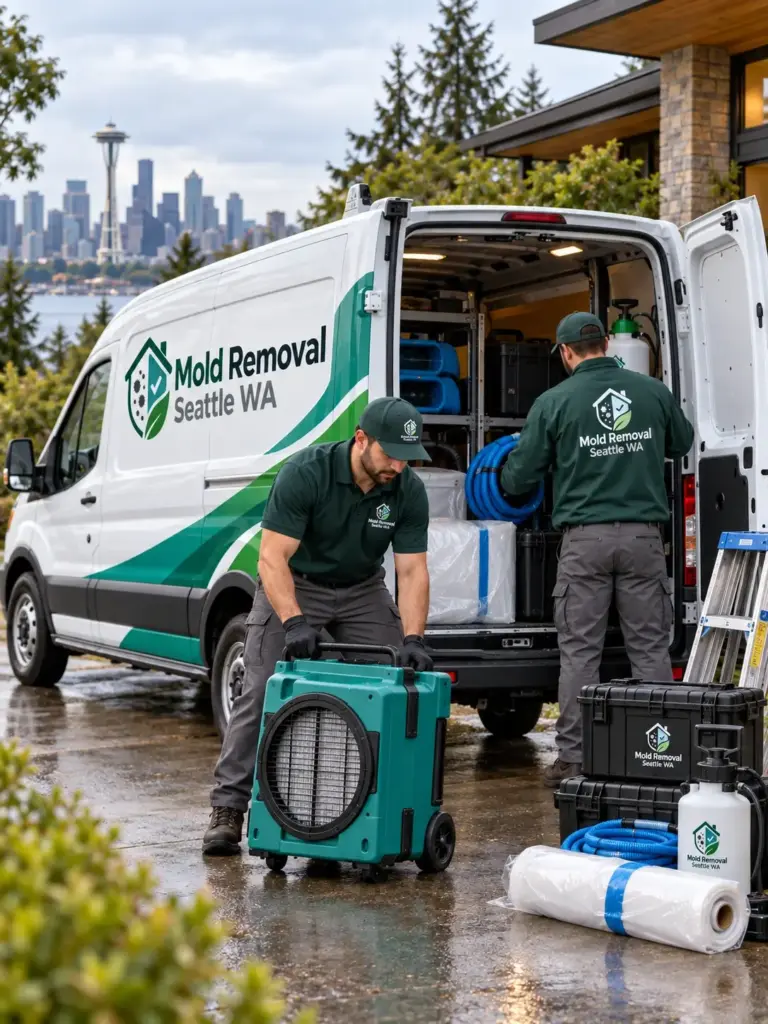
Once the scope is clear, the affected area is contained to keep spores from spreading, and moldy materials are removed or cleaned. Porous items like drywall, insulation, and carpet often need to be cut out and replaced, while hard surfaces can usually be cleaned. Air filtration equipment may run during the work. The contractor you are connected with can explain which materials in your home can be saved and which will likely need to go.
Removing mold only lasts if the moisture problem is solved too. Depending on the cause, that can mean repairing leaks, improving attic or bathroom ventilation, adding a crawl space vapor barrier, running a dehumidifier, or correcting drainage around the foundation. This step is often where the real long-term value lies. Ask the contractor what prevention measures they recommend for your home, and which changes you can handle yourself to keep moisture levels down all year.
When you find mold, it is hard to know whether you need an inspection, testing, or full remediation, and harder still to know who to call. That first step can be simple. One call connects you with an independent local contractor who handles mold work in Seattle. We connect you with independent Seattle mold removal services that cover the full process.
Whether you have a smell you cannot trace, a stain after a leak, or growth across a crawl space, you can call the same number. You get connected with an independent contractor in the Seattle area who can talk through your situation and point you toward the right next step. That saves you from calling separate companies for inspection, testing, and removal before you even know which service you need for your home.
The contractors you reach are independent businesses that work in and around Seattle. They know the moisture problems common to the Pacific Northwest, including damp crawl spaces, condensation, roof leaks, and water intrusion in basements. Each one sets their own pricing, availability, and terms. Before hiring anyone, ask for proof of license and insurance, get the scope of work in writing, and make sure you understand what the job includes.
A phone call is not a commitment. You can ask about the process, the likely scope, and what the contractor recommends, then take time to think it over. Compare options if you like, and ask follow-up questions until you are comfortable. Mold decisions can involve opening walls or replacing materials, so it makes sense to move at a pace that works for you, with a clear understanding of what the work will involve.
Mold is one of the most common concerns for homeowners in the Seattle area, and it tends to raise the same set of questions. The most frequent ones cover why mold is so widespread here, how to tell which service you need, and what you can do to prevent it.
Seattle’s long rainy season, mild temperatures, and high humidity create good conditions for mold for much of the year. Many homes have crawl spaces and basements that stay damp, and older houses often have limited ventilation. Keeping windows closed through the wet months traps moisture from cooking, showers, and even breathing. Condensation on cold windows and exterior walls adds to the problem. Together, those factors make regular attention to moisture important for local homeowners.
It depends on what you are seeing. If you smell mold but cannot find it, testing or an inspection can help locate the source. If you can see growth covering more than a small patch, or mold keeps returning after cleaning, remediation is usually the next step. After a cleanup, clearance testing can confirm the work was effective. If you are unsure, describe the situation when you call and ask the contractor what they recommend.
People often use “black mold” to mean Stachybotrys chartarum, but many types of mold look dark, and color alone does not tell you which type is present. The CDC advises that all mold should be treated the same way when it comes to health concerns and removal. In other words, any mold growing in your home should be cleaned up and the moisture problem fixed, regardless of its color. Testing can identify the type if you want to know.
Mold does not go away by itself as long as moisture is present. It can stop growing when an area dries out, but dormant mold can become active again once conditions turn damp, which in Seattle happens every fall. Dead or dormant mold can also still cause reactions in sensitive people. That is why removing the growth and fixing the moisture source matters much more than waiting to see whether the problem improves on its own.
Controlling moisture is the key. Run bathroom and kitchen fans during and after use, keep indoor humidity below about 50 percent with a dehumidifier during wet months, and fix leaks as soon as you find them. Make sure gutters and downspouts carry water away from the foundation, and check crawl spaces and attics for dampness each season. Wiping condensation off windows and keeping furniture slightly away from exterior walls also helps.
Dealing with mold on your own can mean repeated cleanups, missed hidden growth, and moisture problems that never quite go away. Working with a professional local contractor gives you a better chance of solving the problem completely the first time. They bring the equipment, the methods, and the local knowledge needed to find the source and deal with it properly. The main advantages for homeowners in the Seattle area are practical ones.
Mold growth releases spores and musty odors that linger in closed-up homes, especially during the long wet season when windows stay shut. Locating and removing the source, rather than covering it with air fresheners or paint, is what actually improves the air indoors. Professional contractors use containment and filtration to limit the spread of spores during cleanup. Afterward, many homeowners find their basements, bathrooms, and bedrooms smell fresher and feel more comfortable to spend time in.
For people with allergies, asthma, or sensitivity to mold, living with growth in the home can mean ongoing symptoms like congestion, sneezing, and irritated eyes. Dealing with the mold properly reduces exposure in the space where your family spends the most time. It is not a replacement for medical care, and persistent symptoms deserve a conversation with a doctor. Removing a known source of irritation from the home, though, is a practical step you can take.
Your home is likely your largest investment, and mold can quietly damage it. Growth on framing, subfloors, drywall, and insulation weakens materials over time and can lead to rot where moisture stays trapped. Catching and solving the problem early is usually far simpler than repairing years of hidden damage later. Documented mold work can also help when it is time to sell, since buyers in the Seattle area often look closely at crawl spaces and basements.
The best mold solution is one you only need once. A professional approach looks beyond the visible growth to the conditions that caused it, such as poor ventilation, plumbing leaks, drainage problems, or a crawl space without a proper vapor barrier. Fixing those issues lowers the odds of new growth after the next rainy season. Ask the contractor you are connected with which prevention steps they recommend and which ones you can easily maintain yourself.